
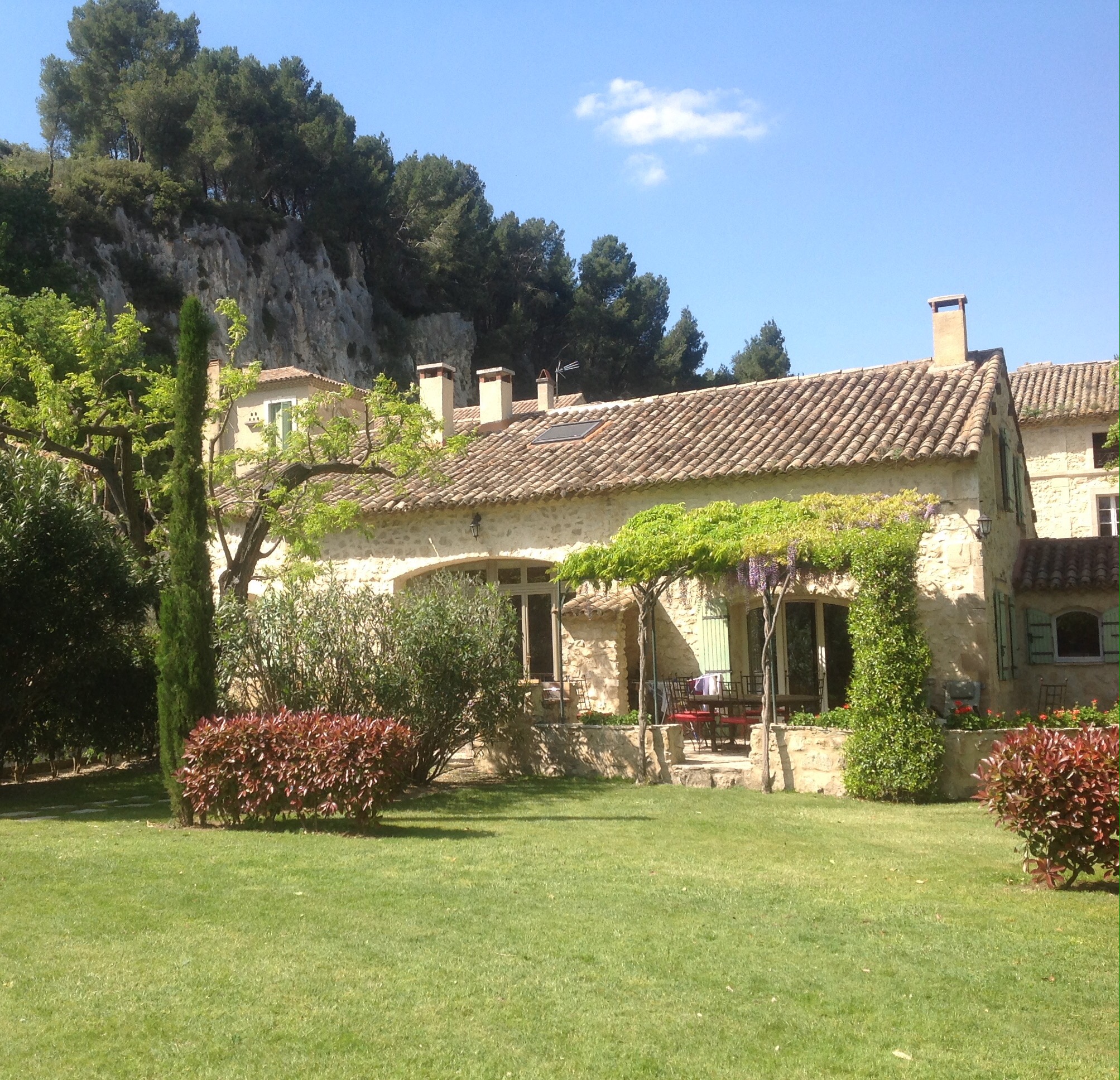
Les Cigales, at the mill below the cliff. Note the typical tile roof, of Provence. The tiles were made by women wrapping the clay around their thig and then setting it aside to bake in ovens. only ladies with certain size thighs ualified for the job. I’m sure I would not have made the cut!
It was a wonderful lazy Sunday morning. No timetable, no schedules … Just the “mistral” the strong north wind that roared and had us looking for an extra sweater. Right at 12:30, the last of the babes arrived from Paris and the noise, hugs, laughter and sharing of stories reached a crescendo as we all interrupted each other sharing at once.
Josie, our master chef, calmed everyone down and got us seated for a toast and a typical Provencial lunch which included wonderful fish cakes made from the leftover fish, asparagus and mashed potatoes with celeriac. What a delicious use of leftovers!!!! and to the fish cakes she added tossed salad with homemade French dressing and the quiche that we bought from the Boulangerie. Yummy! Nobody eats better than we’ve been eating!
Our big event was a fascinating tour of the grounds with the history of Moulin de la Roque given by Guy, Baron Guy Fallon who is an absolute delight and owns the property with his wife Gabby.
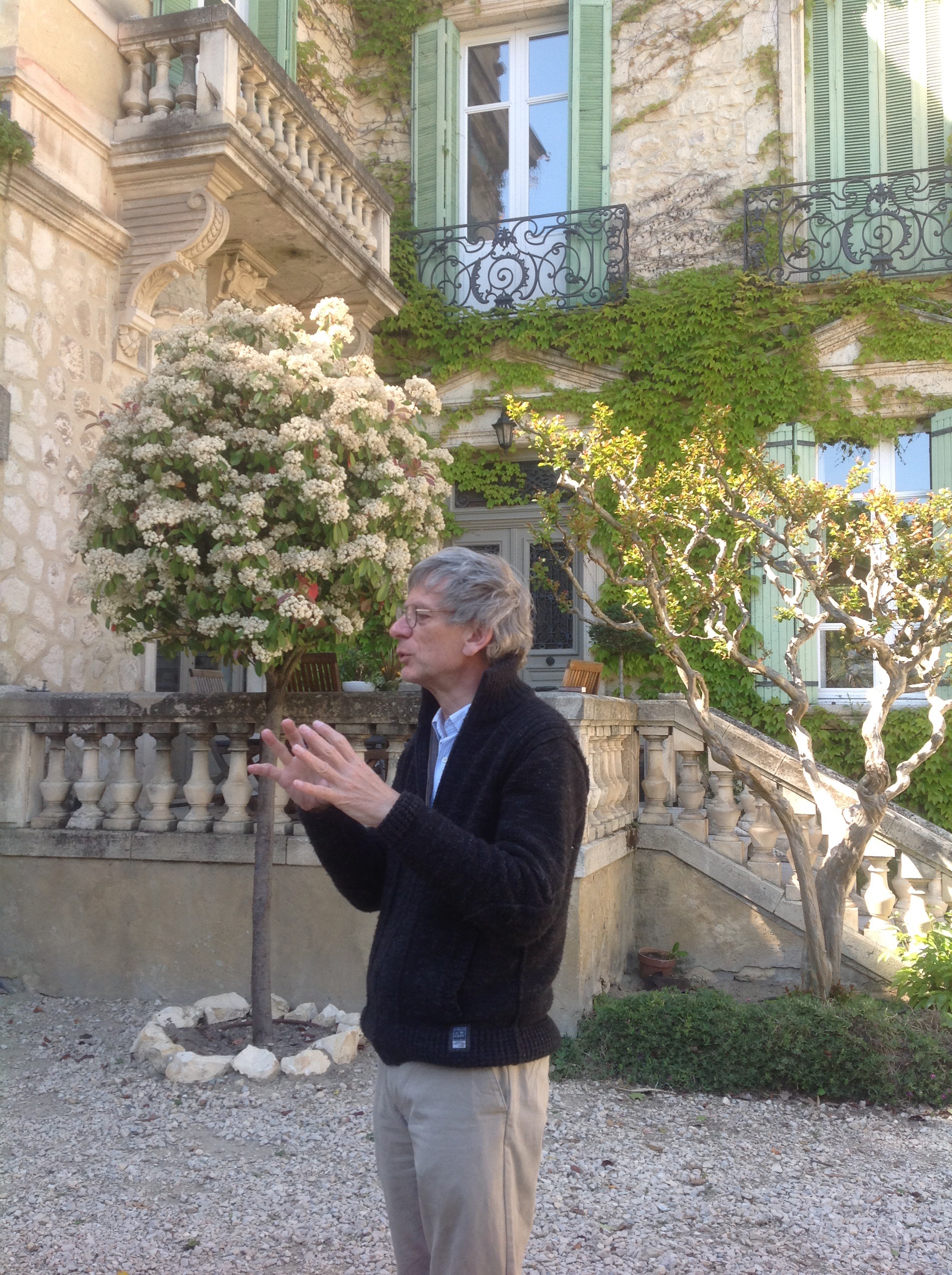
our host and tour guide, Guy
As Guy told us, Provence was not originally NOT a part of France but ruled by their own nobility which kept total control of the land and what was produced. This land had been owned by a Duke and leased to the tenants, but the tenants were not permitted to have a mill that ground wheat for flour… why? Because flour is made into baguettes and in France, whomever controls the bread controls the French :)! It is also the reason why the Popes were placed in Avignon. Avignon was the Capitol of Provence, separate from both France and Italy, and with trouble in Rome, it was decided to move the Papal palace to Provence. Once things calmed down the powers that be tried to move the Pope back to Rome. It took some “arguing and discussion” to get a common Pope proclaimed and relocated to Rome. But now I have a better understanding of the reason for the Palace de Papes in Avignon.
The whole society changed with the French Revolution. The Duke lost his rights to the property and it became the possession of the tenants. It also lifted the restrictions on building and operating a flour mill. That is when this mill was built and the buildings were expanded. Guy purchased the property about 23 years ago and things were pretty run-down. Still, it is amazing how much of the mill, as it existed since the late 1800s, is still here on the estate. He has lovingly restored the stable, warehouse, house, and the main millers cottage. The tour was full of many wonderful stories and information.
Dinner was under the direction of Josie and her sous-chefs. We had foie gras on buttered toasts, a homemade fruit compote served on endive and Sauternes wine. Dinner itself was a chicken and mushroom dish served with a rice pilaf and asparagus with hollandaise. Dessert was an apple tart purchased from the boulangerie. Angels were dancing on the tongue!
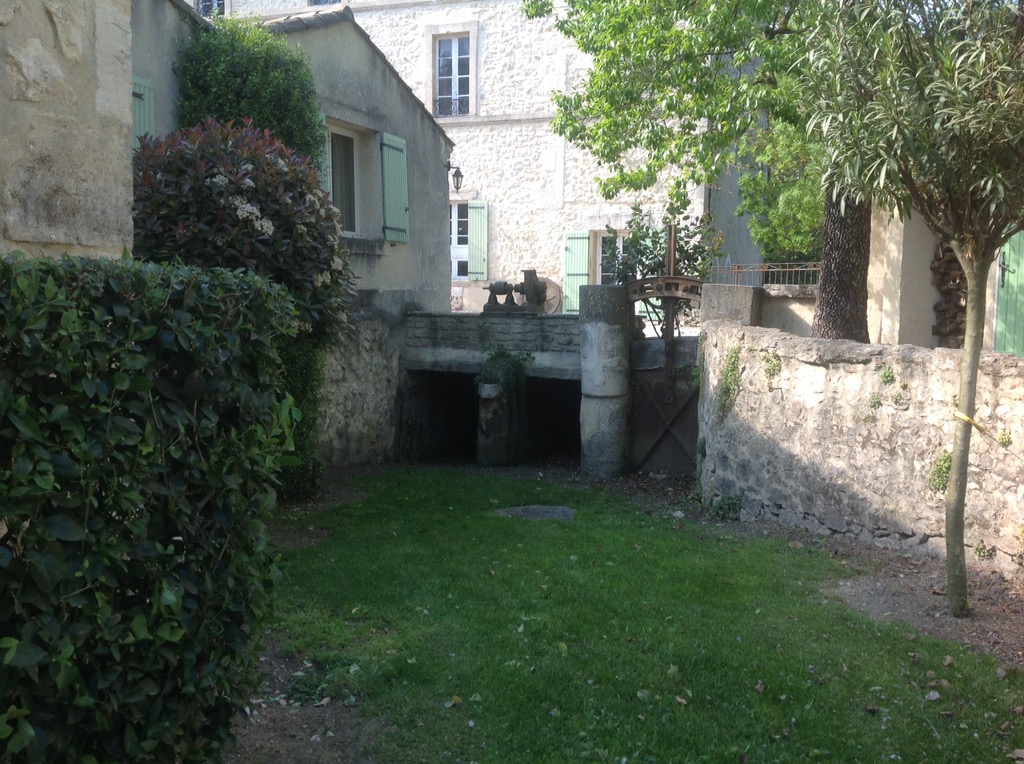
former opening for the canal that moved the water wheel

area of former stables with stone troughs
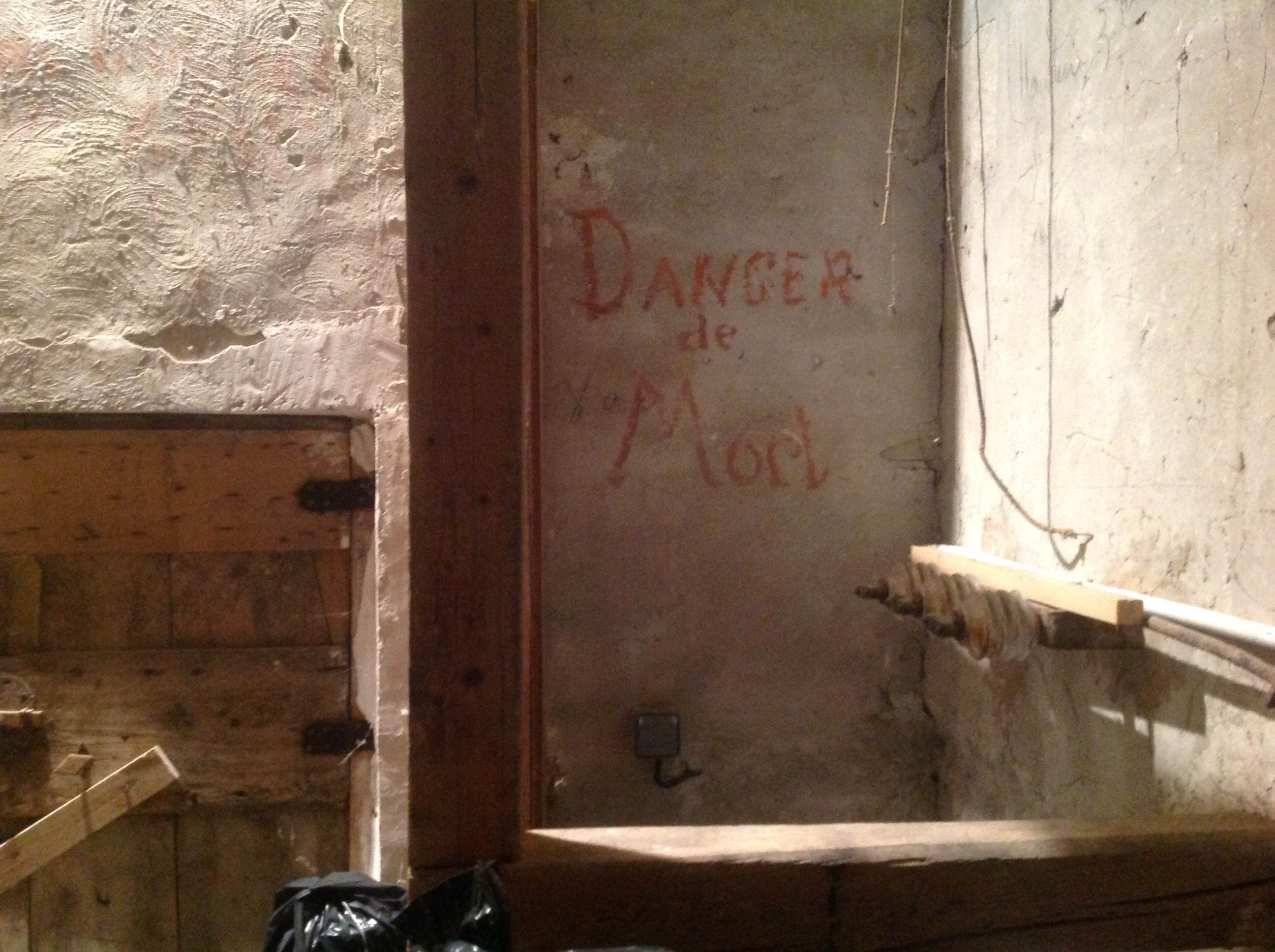
so many dangers operating a flour mill, the powdery grain was highly explosive. the sacks of grain were piled very high. the rats would eat away at the grain from the bottom leaving the tall piles very precarious
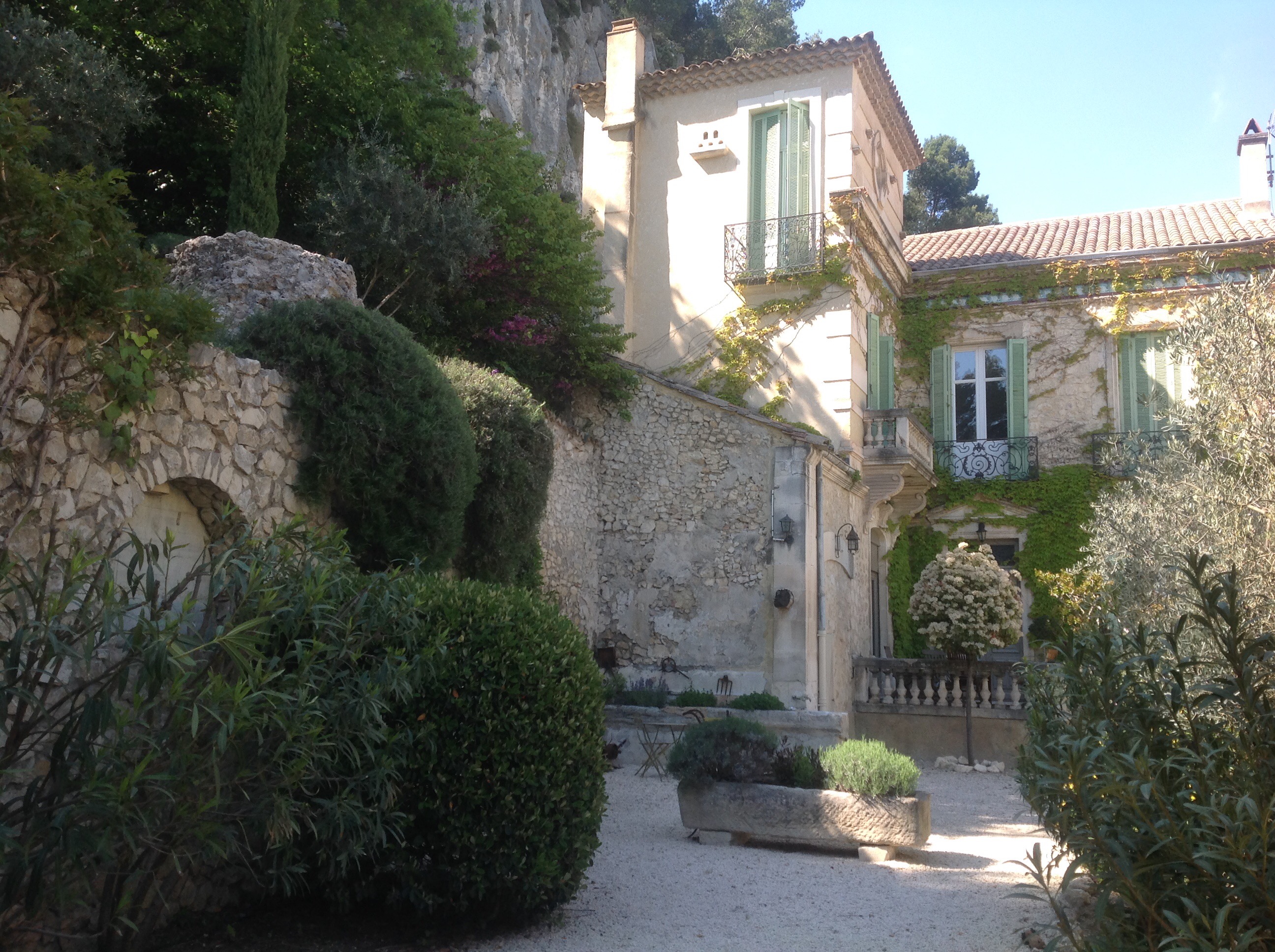
the main house,tall tower sign of nobility. Note the small holes next to the long window are for the room at the top kept for the pigeons

the mill. the smooth “E” limestone pieces show the edge of the original bulilding and where the additions occurred.
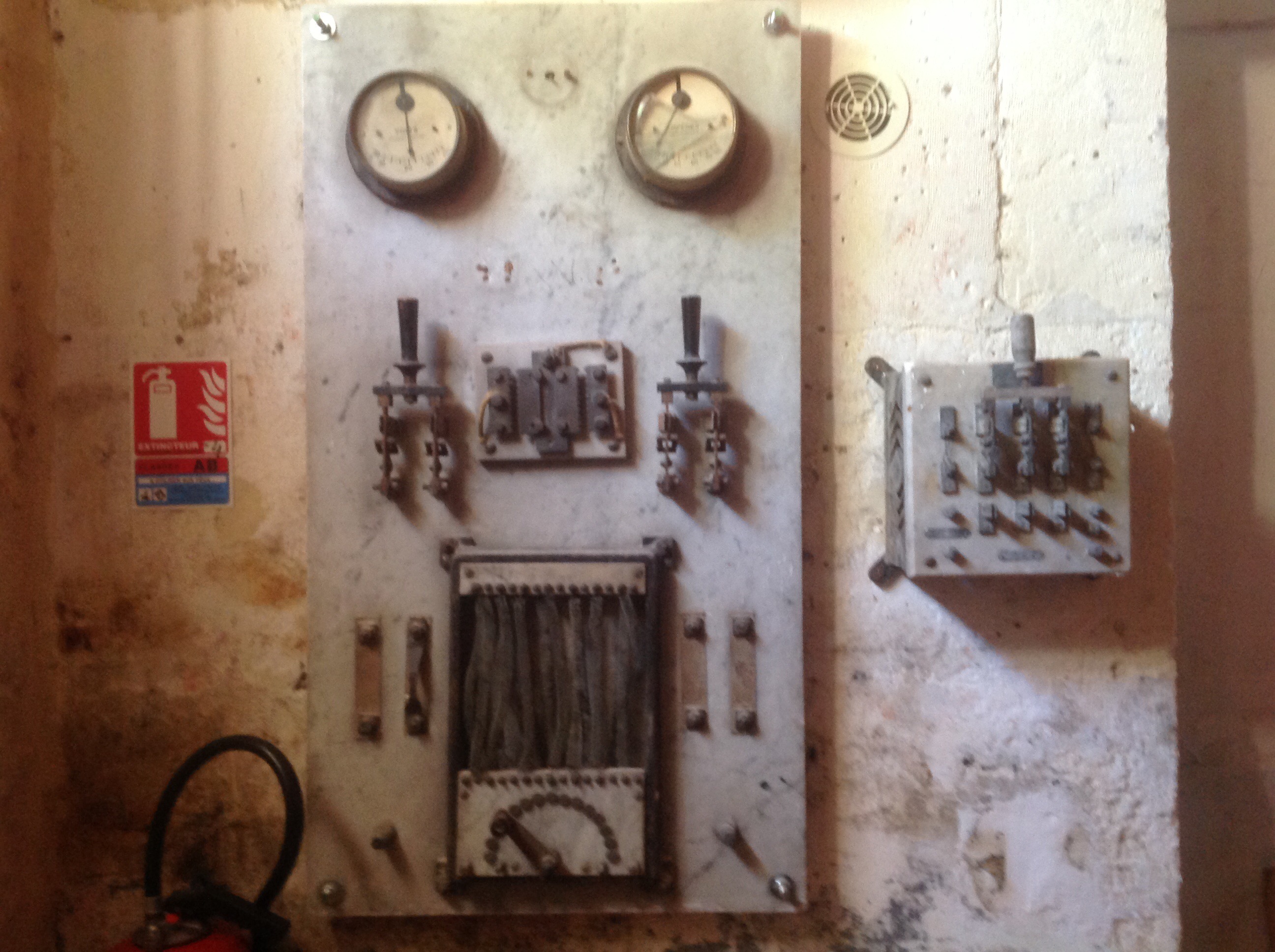
back in the late 1800’s the mill used continous electricity. it was operated at this panel. the fuses werel lead bars that would melt before the other components. one lead fuse remains.
 joaniespennythoughts